AI customer support · July 7, 2026 · 13 min read
Can you use ChatGPT for customer service?


People ask ChatGPT this question directly: "Can I use you for customer service?" It's a fair question — the writing is fluent, the reasoning is good, and it answers almost anything. So the honest answer is yes, you technically can, and the underlying model is genuinely excellent. But "can" and "should you point it at your storefront as-is" are different questions.
We build an AI agent on top of models like the one behind ChatGPT, so we're not here to talk it down — the model quality isn't the problem. The gap is grounding, integration, and guardrails. Here's where raw ChatGPT helps, where it breaks for a real store, and what actually closes that gap.
Yes, you can use ChatGPT for customer service — via the API, a custom GPT, or the app. But raw ChatGPT isn't grounded in your store's content, so it can invent policies and prices, can't look up a live order or search your real catalog, and offers no clean human handoff. For a store, you want a grounded agent built on top of it.
Quick take
- The model is great; raw ChatGPT isn't a support tool. It's ungrounded, so it can confidently invent a returns window you don't have.
- Three ways to use it: the ChatGPT app, a custom GPT, or the API — each needs work before it's safe on a storefront.
- What a store needs is grounding + integration + guardrails: answers only from your content, live order and catalog lookups, and a clean human handoff.
- Mind the data side. Consumer ChatGPT is not the place to paste customer order details — enterprise/API tiers have different policies.

Can you use ChatGPT for customer service?
Yes — nothing stops you. The language model behind ChatGPT is one of the best conversational engines available, and OpenAI gives you three real ways to put it in front of customers (the app, custom GPTs, and the API). For drafting replies, summarising a long thread, or brainstorming a tone of voice, it's already an excellent internal assistant.
The catch is what "customer service for a store" actually means. It isn't just fluent chat — it's answering your return policy correctly, telling a customer where their order is, and recommending a product you actually stock. Raw ChatGPT knows none of that. It knows its training data, whatever you paste into the current chat, and — with browsing on — whatever is on the public web. What it doesn't know is your unpublished policies, your live stock, or your customers' orders. Point it at your storefront untouched and it will answer questions about your business using general knowledge and guesswork — which is exactly the failure mode you can't afford in support.
What are the ways to use ChatGPT for support?
There are three practical routes, from least to most work:
1. The ChatGPT app. Your team opens chatgpt.com to draft and refine replies by hand. Genuinely useful as an internal copilot. But it's a person-in-the-loop tool — it doesn't sit on your site, doesn't see your live data, and every reply still passes through a human.
2. A custom GPT. In the ChatGPT app you can build a "GPT" with custom instructions and a few uploaded files (your FAQ, your policies). This narrows its knowledge and is a real step up. But it lives inside ChatGPT — customers would need their own ChatGPT accounts to use it — the uploaded knowledge is a static snapshot, and while GPT "Actions" can technically call external APIs, building and securing those integrations is on you — it doesn't ship connected to your orders or prices.
3. The API. This is the serious route. You call OpenAI's API from your own app and build the support experience around it: a widget on your site, your content wired in, connections to your order and catalog systems, logging, and handoff. The model does the talking; you build everything that makes it safe and useful. That "everything" is precisely the grounded agent we describe below — and it's a real engineering project, which is why most stores use a tool that has already done it.
The pattern is clear: the further you go, the more the model becomes an ingredient rather than the finished product. For the difference between a raw model and a purpose-built support agent, see conversational AI vs. a chatbot.
Where does raw ChatGPT fall short for a store?
The gaps aren't about intelligence. They're about what the model can and can't see and do.
It isn't grounded in your content. Ask raw ChatGPT about your shipping times and it will answer — plausibly, confidently, and possibly wrong. It has no way to know your actual policy unless you've fed it in and constrained it to only use that. This is the single biggest risk, and the one that turns a helpful bot into a liability.
It can't look up a live order. "Where's my order?" is the most common support question there is, and raw ChatGPT simply cannot answer it. It has no connection to your order system and no way to verify who's asking.
It can't search your real catalog. It might recommend a product you discontinued, quote a price from its training data, or invent a variant. A store agent needs to search live stock and pricing, not recall.
There's no clean human handoff. When a real bot hits its limit, a human should take over from a shared inbox with the full conversation in front of them. Raw ChatGPT has no concept of "escalate this to a person."
The hallucinated-policy trap
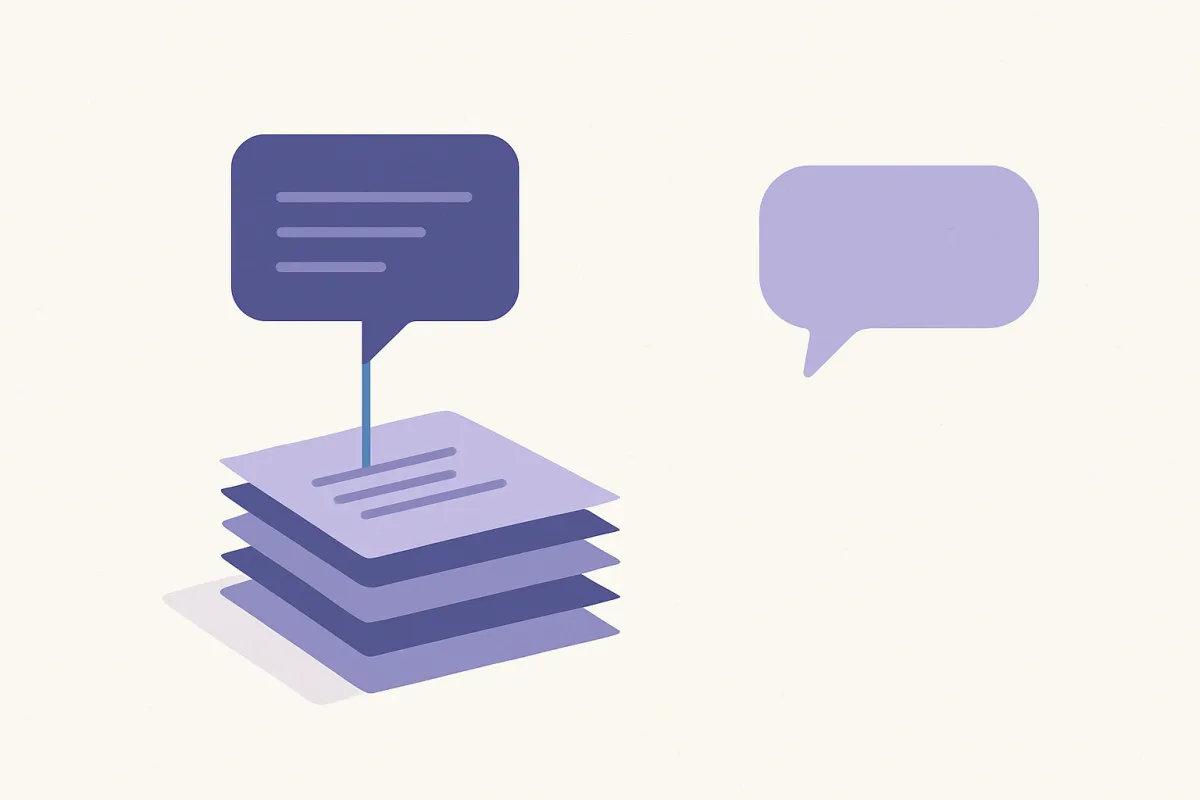
An ungrounded model asked "what's your return window?" will often just make one up — a confident "30 days, no questions asked" when your actual policy is 14 days on unworn items. The customer screenshots it, and now you're honouring a promise you never made. A grounded agent answers only from your published policy and cites it; when it doesn't know, it says so and hands off. This one behaviour is the whole reason grounding matters. More on avoiding it in our guide to an AI chatbot for an online store.
What is a grounded AI agent, and why does it matter?
A grounded agent still uses a top-tier model like the one behind ChatGPT — but it's wired so the model answers only from your approved content, and can act on your live systems. In practice that means:
- Retrieval before generation. Before the model writes a word, the system searches your actual content — policies, FAQs, product pages — and hands it those passages. The model answers from them and cites the source, instead of reaching for general knowledge.
- Real store actions. The agent can search your live catalog for current products and prices, and look up a customer's order after an identity check — the two things that deflect the most tickets.
- Guardrails and handoff. When it isn't confident, it says so and routes the conversation to a human through a shared inbox, rather than guessing.
That's the whole difference: same excellent model, but constrained to the truth and connected to your store.
| Raw ChatGPT | Grounded e-commerce agent | |
|---|---|---|
| Grounding | General knowledge; can invent policies | Answers only from your content, with sources |
| Order lookup | No connection to your orders | Live order lookup after an identity check |
| Catalog search | Recalls or guesses products/prices | Searches your live catalog and pricing |
| Human handoff | No concept of escalation | Clean handoff via a shared inbox |
| Data privacy | Depends on tier; consumer app is risky for customer data | Purpose-built for handling customer conversations |
| Install | You build the widget and plumbing | One-line embed, live the same day |
"Raw ChatGPT" here means the model used as-is, without a grounding and integration layer built around it. Capabilities depend on how you deploy it and on your OpenAI plan; check OpenAI's current terms.
Loqara is one example of this pattern: grounded chat and voice in a single widget, built on top of leading language models, answering from approved store content with sources and searching connected catalogs. WooCommerce and Magento stores can also enable identity-checked order lookup; Shopify, Verskis, and feed stores cannot today. Install is one line. See where it sits among the best AI chatbots for e-commerce.
Is it safe to put customer data into ChatGPT?
Be careful here, and don't overstate it in either direction. The consumer ChatGPT app is not the right place to paste customer order numbers, addresses, or emails — it's a personal-productivity product, not a system designed around handling other people's personal data on your behalf. By default, OpenAI can use consumer ChatGPT conversations to improve its models unless you opt out (OpenAI's data-usage policy). Doing so can create real privacy and GDPR headaches, especially for EU customers.
That said, the picture differs by tier. OpenAI's business, enterprise, and API offerings have different data-handling terms than the free consumer app — OpenAI states it does not train on ChatGPT Team/Enterprise or API data by default (OpenAI enterprise privacy). So "is ChatGPT safe for customer data?" doesn't have a single yes/no answer; it depends entirely on which ChatGPT and how you've set it up. If you're serious about support, you want a tool built for processing customer conversations, with a clear data-processing agreement — not a consumer chat window. We go deeper in AI chatbots, GDPR, and data privacy.
So should I use ChatGPT or a dedicated agent?
It comes down to what you're trying to do:
- Drafting replies and internal help → the ChatGPT app is great. Keep using it.
- A quick, self-contained Q&A bot with a handful of docs, for internal or low-stakes use → a custom GPT can work.
- A customer-facing agent on your storefront that answers correctly, looks up orders, searches your catalog, and hands off to a human → you want a grounded agent — either built yourself on the API, or an off-the-shelf tool that already has.
If you have the engineering time and want full control, building on the API is a legitimate path. If you'd rather not spend weeks on retrieval, integrations, guardrails, and handoff, that's exactly the work Loqara has already done — priced per conversation, with a real free tier of 100 conversations a month to test on your own traffic, and voice as an optional add-on.
Frequently asked questions
Can I use ChatGPT for customer service?
Yes. You can use ChatGPT for support through the ChatGPT app (as an internal drafting assistant), a custom GPT (a narrowed Q&A bot), or the API (a full agent you build yourself). The underlying model is excellent. The limitation is that raw ChatGPT isn't grounded in your store's content and isn't connected to your live orders or catalog, so a store usually needs a grounded agent built on top of it.
Will ChatGPT make up my store's policies?
Ungrounded, yes — it can. Asked about a return window or shipping time it doesn't actually know, a raw model tends to produce a plausible, confident answer that may be wrong. A grounded agent avoids this by answering only from your published content and citing the source, and by saying "let me get a human" when it isn't sure, rather than guessing.
Can ChatGPT look up a customer's order?
Not on its own. Raw ChatGPT has no connection to your order system and no way to verify who's asking. To answer "where's my order?", you need an agent wired into your store that can look up the order after an identity check. That integration is something you build around the API — or get out of the box from a purpose-built tool.
Is it safe to put customer data into ChatGPT?
It depends on which ChatGPT. The free consumer app is not designed for handling other people's personal data and can raise privacy and GDPR concerns, so avoid pasting customer details there. OpenAI's business, enterprise, and API tiers have different data-handling terms — generally not training on your data by default. For real support, use a tool built for customer conversations with a proper data-processing agreement.
What's the difference between ChatGPT and a grounded AI agent?
They can use the same underlying model. The difference is the layer around it. A grounded agent retrieves your real content before answering (so it doesn't invent policies), can search your live catalog and look up orders, and hands off to a human when it's unsure. Raw ChatGPT does none of that by default — it answers from general knowledge with no connection to your store.
Do customers need a ChatGPT account to use a custom GPT?
Yes — custom GPTs live inside the ChatGPT product, and OpenAI's help docs say users must be signed in to ChatGPT to chat with a GPT (a free account is enough; no paid plan needed) (OpenAI Help: GPTs in ChatGPT). That makes custom GPTs better suited to internal use or low-stakes Q&A than to a public storefront. A support widget embedded directly on your site needs no account from the customer — they just open the chat.
Can a grounded agent do voice too, not just chat?
Some can. Loqara, for instance, offers grounded chat and a real-time voice agent in the same widget, so customers can either type or speak their question and get answers from your content. Voice is an optional paid add-on on top of the base plan. Not every ChatGPT-based setup includes voice, so check what a given tool actually ships.
The honest bottom line: you can absolutely use ChatGPT for customer service, and the model behind it is superb — that was never the issue. For a store, the missing pieces are grounding, integration, and guardrails: answering only from your content, looking up real orders, searching your live catalog, and handing off cleanly to a human. Get those, and you get the best of the model without the risk of a bot inventing your return policy.
Try Loqara free on your store — grounded chat and voice, one line to install, 100 conversations a month free, no credit card.
OpenAI's product tiers and data-handling terms change; details here are directional and as of mid-2026 — check OpenAI's current documentation before deciding.