Vendor comparisons · July 3, 2026 · 11 min read
Tidio vs Zendesk: which fits your store in 2026?


Tidio vs Zendesk is a slightly strange comparison, and most articles about it pretend otherwise. These are not two versions of the same thing. Tidio is a friendly chat widget with a flow builder and an AI add-on, built for small businesses that want to talk to website visitors. Zendesk is an enterprise helpdesk with AI woven through it, built for support departments. Comparing them head-to-head is a bit like comparing a bicycle to a delivery van — both are transport, but nobody cross-shops them by accident.
And yet people do search this exact comparison, and for a sensible reason: both tools show up on every "best customer service software" list, and if you run an online store you genuinely might be choosing between them. One is priced for you and might be too shallow; the other is deep and might be priced for someone else.
So here's the honest version: what each actually is in 2026, what they really cost once the AI is included, where each wins, and the case where the right answer is neither.
Neither is universally better — they're built for different stores. Pick Tidio if you're small and hands-on and like building flows; pick Zendesk if you have a real support team and multi-channel volume. If you mostly need a grounded AI agent with native store actions at a flat, predictable price, that's a third category — where Loqara fits.
Quick take
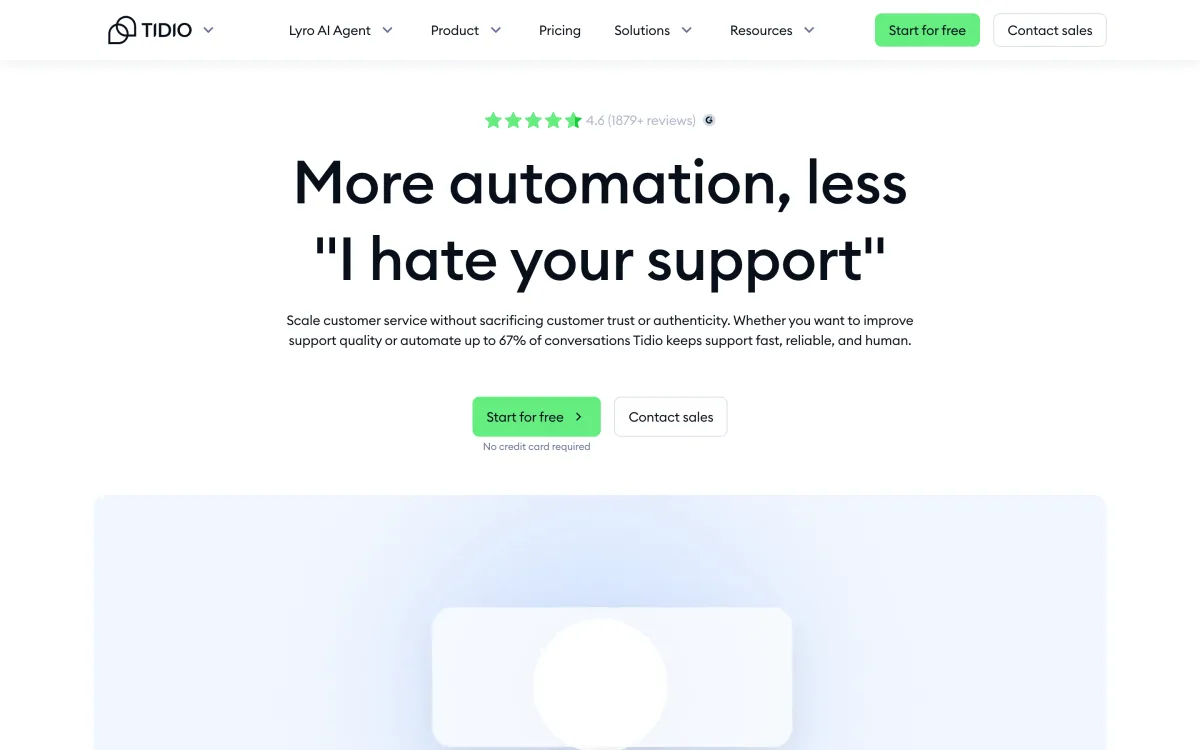
- Tidio: approachable live chat + visual flow builder; plans from free to ~$49/month — but Lyro, the AI agent, is a separately billed add-on (from ~$32.50/month), and the plan ladder jumps from ~$49 to Plus at $300+/month (Tidio pricing).
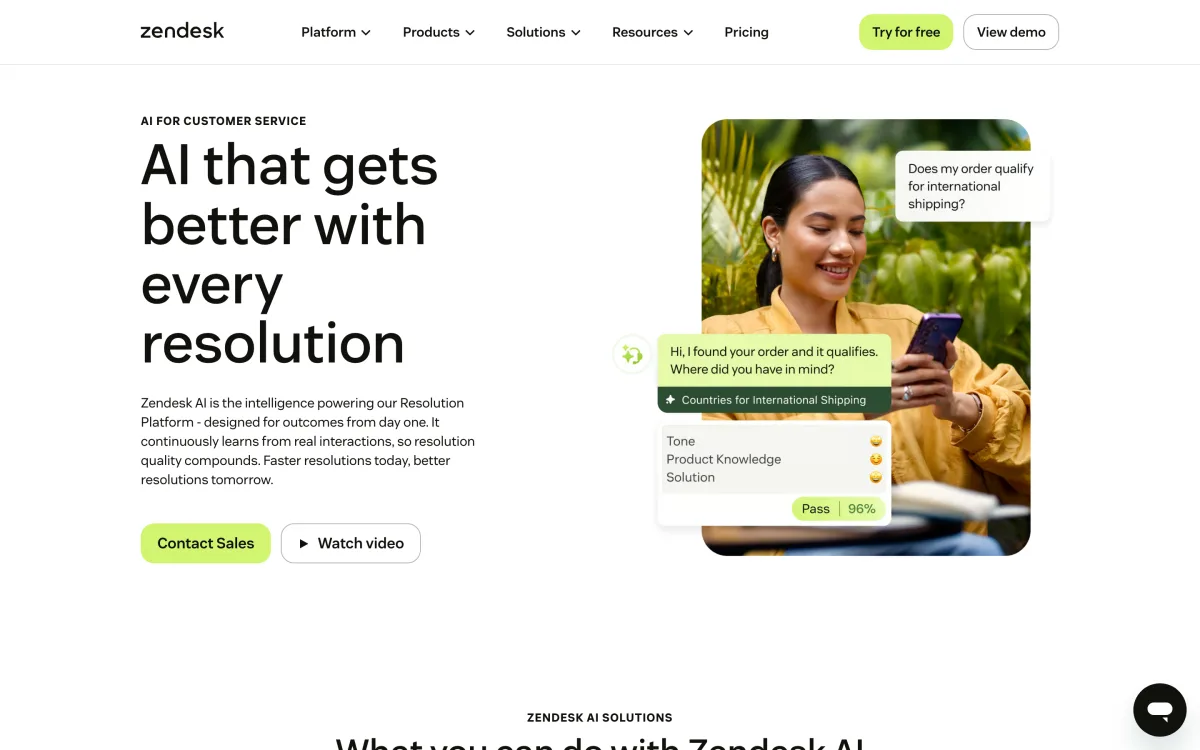
- Zendesk: a full omnichannel helpdesk from $19–$115/agent/month, with AI agents included on all plans but metered per automated resolution, plus paid add-ons like Copilot (Zendesk pricing).
- Pick Tidio if you're small, hands-on, and like building flows. Pick Zendesk if you have a real support team and multi-channel volume.
- Neither fits perfectly if you want a grounded AI agent with native store actions at a flat, predictable price — that's a third category.
Two tools, two philosophies
Tidio starts from the website visitor. Its core is a chat widget, a shared inbox, and Flows — a drag-and-drop builder for scripted conversations ("if visitor is on the pricing page, offer a discount"). Its AI agent, Lyro, arrived later and is sold as its own line item on top. Tidio is genuinely easy: you can install it, build a welcome flow, and be talking to customers within an hour, and its Shopify and WooCommerce integrations cover the basics like order lookup.
Zendesk starts from the ticket. Everything — email, chat, social, voice — becomes a ticket in an agent workspace, with routing, SLAs, macros, and analytics around it. Its AI story in 2026 is genuinely strong: AI agents are now included in every plan (billed per automated resolution), and the Copilot add-on assists human agents. But you buy the whole helpdesk to get any of it, and you administer it like the platform it is.
That difference in starting point explains almost every row of the comparison below.
Tidio vs Zendesk, head to head
| Tidio | Zendesk | |
|---|---|---|
| Built for | Small businesses, website-first chat | Support teams, ticket-first operations |
| Base price | Free; Starter ~$24/mo; Growth from ~$49/mo | $19–$115/agent/mo (annual); Enterprise custom |
| AI agent | Lyro — separate add-on from ~$32.50/mo (50 convos) | Included on all plans, metered per automated resolution |
| AI pricing unit | Per Lyro conversation | Per automated resolution (+ per-agent add-ons like Copilot ~$50) |
| Channels | Chat, email, Messenger, Instagram, WhatsApp | Full omnichannel incl. voice, social, help center |
| E-commerce actions | Order lookup via Shopify/Woo integrations | Via marketplace apps, not native |
| Setup effort | Hours — genuinely self-serve | Days to weeks — a platform you configure |
| Voice support for customers | No | Yes (telephony included from Suite Team) |
| Scaling path | Plan ladder jumps ~$49 → $300+/mo | Smooth but multi-dimensional (seats + resolutions + add-ons) |
Prices reviewed on 26 August 2026, annual billing where applicable, from tidio.com/pricing and zendesk.com/pricing — both vendors change packaging often, so check before deciding.
What the pricing really looks like
Sticker prices flatter both tools, in different ways.
Tidio's quiet add-on stack. The advertised ~$24/month Starter or $49/month Growth plan is the chat product, billed per conversation rather than per seat. The thing most buyers actually want in 2026 — Lyro answering questions automatically — is billed separately, starting around $32.50/month for a small conversation allowance and climbing with usage (Tidio pricing). Add it up and a realistic Tidio-with-AI setup often lands well above the sticker. Then there's the ladder problem: the plans jump from Growth ($49) straight to Plus (from $300/month plus usage, sold via sales), with nothing in between — roughly a 6x step. Growing stores hit that cliff earlier than they expect.
Zendesk's multi-dimensional bill. Zendesk grows in three directions at once: more agents means more seats, more automation means more per-resolution charges, and more capability means more add-ons (Copilot at $50/agent/month, plus QA and workforce management — Zendesk pricing). None of it is hidden — it's just hard to forecast, because your bill scales with how well the AI performs, not with a number you control. We've broken down that model in our full Zendesk alternatives guide.
Compare pricing units, not prices
Tidio bills per Lyro conversation; Zendesk bills per automated resolution plus seats. On the same monthly traffic these can differ dramatically — and both differ again from flat per-conversation pricing. Estimate your real monthly conversation volume, apply each vendor's unit, and compare totals. Our buyer's checklist has a worksheet for exactly this.
Where Tidio wins
- Time to value. One afternoon and you're live. No sales call, no onboarding project.
- Price floor. There's a real free plan and paid tiers a small store can actually afford.
- The flow builder. If you enjoy mapping conversations — proactive messages, discount triggers, quiz-style product finders — Tidio's Flows is one of the friendliest builders around.
- Small-team ergonomics. The inbox, mobile app, and channel integrations (Messenger, Instagram, WhatsApp) fit how a two-person store actually works.
Its trade-offs are the mirror image: Lyro is an add-on rather than the core (and answers from the content you feed it, with less depth than the premium AI agents), scripted flows require ongoing gardening, and the pricing ladder has that awkward gap right where a scaling store needs a middle rung. If you've outgrown it, we've collected Tidio alternatives for e-commerce separately.
Where Zendesk wins
- True omnichannel at volume. Email, chat, social, and voice in one workspace with shared customer context — nothing in Tidio's class matches it.
- AI maturity. Zendesk's AI agents and Copilot are trained on enormous volumes of real support data, and triage/routing genuinely saves agent time at scale.
- Process and compliance. Roles, approval workflows, sandboxes, SLAs, audit trails — the things a 30-agent operation needs and a 3-person store never thinks about.
- Room to grow. You will not outgrow Zendesk. Ever. That's rather the point.
The trade-offs: cost that stacks across seats, resolutions, and add-ons; real administrative overhead; and e-commerce actions (order lookup, product search) that arrive via marketplace apps rather than natively.
The third option: neither
Here's the case both tools miss, and it happens to be common among online stores: you don't want to build flows by hand (Tidio's model), and you don't want to run a helpdesk platform (Zendesk's model). You want an AI agent that reads your store's actual content, answers customers accurately with sources, looks up orders, and hands off to a human when it should — at a price you can predict.
Full disclosure — Loqara is our product, and this is the gap we built it for. It answers from approved store knowledge with citations (no invented return policies), searches connected product catalogs, supports identity-checked order lookup on WooCommerce and Magento (not Shopify), includes live human handoff on every plan including the free one, and adds something neither Tidio nor Zendesk offers a small store: real-time voice calls in the same widget, as a €49/month add-on. Pricing is flat per conversation — free for 100 conversations/month, then €149/€249/€449 per month with no setup fees — so there's no add-on stack and no resolution meter. Install is one line of script. If you're weighing Tidio vs Zendesk because one feels too small and the other too big, this middle category is worth a look before you decide — our comparison of the best AI chatbots for e-commerce covers it alongside both.
So which should you choose?
Match the tool to your operation, not to a feature grid:
- Solo founder or small store, hands-on, budget-first → Tidio. Start free, build a few flows, add Lyro if the volume justifies it.
- Real support team (10+ agents), multiple channels, process requirements → Zendesk. It's the safer platform bet, and the AI is now included in every plan.
- Store of any size whose tickets are mostly "where's my order?", product questions, and returns → consider the third category above: a grounded e-commerce AI agent with flat pricing.
- Already on one of them and it's working? Stay. Switching costs are real, and neither tool is bad — they're just built for different buyers.
Frequently asked questions
Is Tidio cheaper than Zendesk?
At the entry level, clearly yes: Tidio has a free plan and paid tiers from roughly $24–49/month, while Zendesk starts at $19 per agent and realistically runs $55–115/agent/month for the plans stores would want (Tidio pricing, Zendesk pricing). But add Lyro (from ~$32.50/month) and usage growth, and Tidio's advantage narrows — and Tidio's jump from ~$49 to $300+/month means scaling stores can hit a wall. Model your own volume on both before assuming.
Does Tidio's Lyro AI compare to Zendesk's AI agents?
They're built differently. Lyro is an add-on that answers from the knowledge content you provide — solid for FAQs, lighter on deep automation. Zendesk's AI agents are more capable at scale, handle more channels, and plug into triage and routing, but they're metered per automated resolution and shine mainly inside a full helpdesk operation. For a small store's repetitive questions, Lyro is often enough; for a support department, Zendesk's AI is the stronger system.
Which is better for Shopify or WooCommerce stores?
Tidio integrates more directly with both platforms out of the box, including basic order lookup, and its price fits store budgets. Zendesk reaches e-commerce data through marketplace apps, which works but adds assembly. That said, if store actions are the main reason you're shopping, purpose-built e-commerce agents handle live product search and identity-checked order lookup more natively than either — see our best AI chatbots for e-commerce roundup.
Can I start on Tidio and move to Zendesk later?
Yes, and plenty of businesses do exactly that as they grow into a real support team. The migration isn't painless — flows don't transfer, and history exports are imperfect — but it's routine. The pattern to avoid is buying Zendesk years early "to be safe": you'll pay department prices for a store-sized problem the whole time.
Do either of them support voice?
Zendesk includes telephony from Suite Team up, with generative AI for voice on higher tiers (Zendesk pricing) — it's a helpdesk strength. Tidio is text-only for customers. If you want customers to speak to an AI in the widget itself and get spoken answers grounded in your store content, that's currently a third-category feature — Loqara offers it as an add-on, which we cover in our Tidio alternatives guide.
The honest bottom line: Tidio and Zendesk are both good at what they're for — they're just for different companies. Small and hands-on: Tidio. Support department at scale: Zendesk. Store in the middle that mostly needs accurate, grounded answers and order lookups at a predictable price: look at the newer category built exactly for that before you settle for either.
Both vendors' public features and prices were reviewed on 26 August 2026. They remain approximate; check current pricing and quoted usage terms before deciding.