AI for e-commerce · August 14, 2026 · 10 min read
AI chatbot for fashion stores: help shoppers choose size and fit

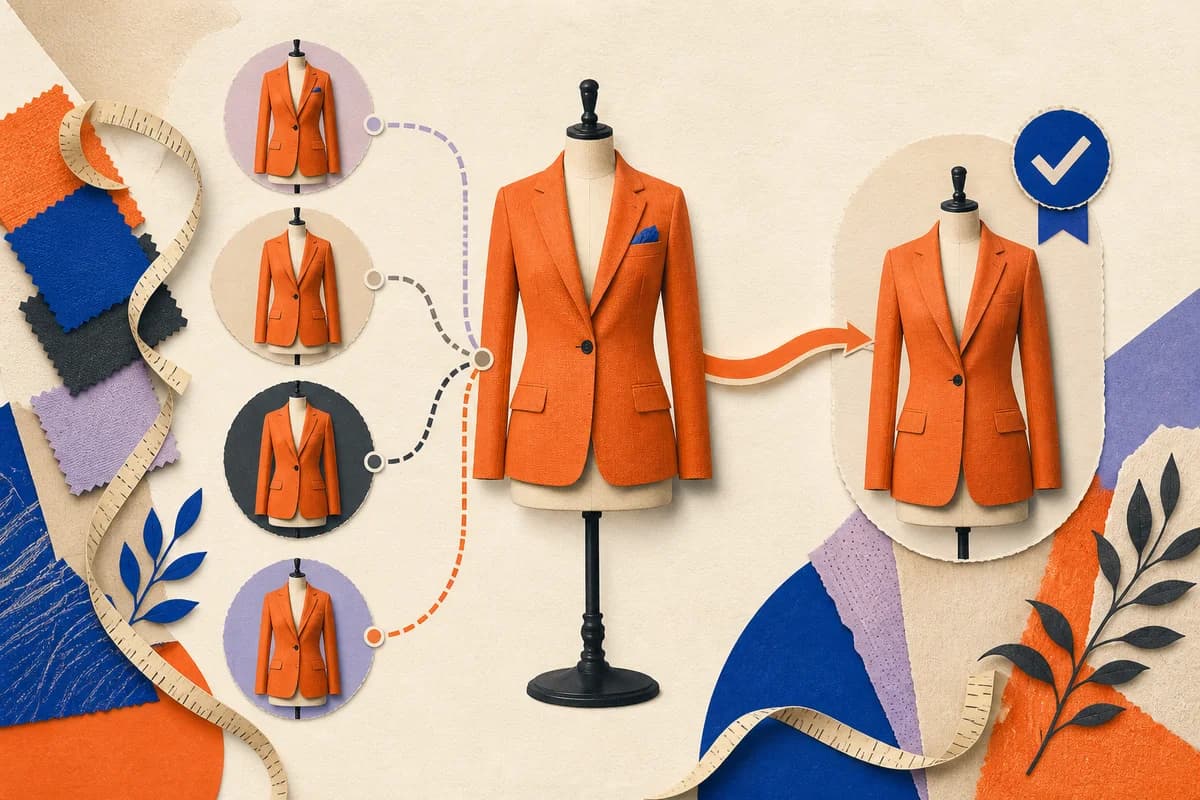
“I normally wear a medium. Which size should I order?” sounds like an easy question until the store carries six brands, three size systems, relaxed and fitted cuts, and fabrics that behave differently after washing.
A fashion-store assistant can make that decision easier. It can collect the shopper’s preferences, retrieve the right garment measurements and variant, explain the evidence, and disclose what remains uncertain. What it cannot do is turn an inconsistent size chart into a reliable fit guarantee.
An AI chatbot for a fashion store helps shoppers compare garment measurements, size systems, cuts, materials, colours, and live variants through a short conversation. It should distinguish recorded product facts from subjective fit guidance, explain uncertainty, and never guarantee that a size will fit when body shape, styling preference, or product data leaves room for doubt.
Quick take
- Size labels are not measurements: “M” is useful only with the brand, garment, system, and cut.
- Fit is a preference: two shoppers with similar measurements may want different silhouettes.
- Variant accuracy matters: the recommended size, colour, price, image, and stock must describe the same sellable item.
- Evidence beats confidence: show which chart or product fact supports the suggestion.
- No fit guarantee: use clear uncertainty and preserve the normal return route.
Why is fashion product discovery unusually difficult?
Fashion shoppers combine objective constraints with subjective preferences. A product has measurements, fabric composition, colour, availability, and care instructions. A person has proportions, comfort needs, an intended occasion, and an idea of how close or loose the garment should look.
Several things make a plain keyword search struggle:
- the same size label can differ by brand, market, category, or collection;
- garment measurements and body measurements are not interchangeable;
- “oversized”, “slim”, “cropped”, and “relaxed” describe different dimensions of fit;
- fabric stretch, lining, construction, and intended layering change the decision;
- colour and size combinations have separate stock, images, prices, and URLs;
- shoppers often use natural language such as “roomy enough for a jumper” rather than catalog terminology.
Google’s apparel data guidance treats size, colour, material, pattern, age group, gender, and shared item groups as distinct product attributes—not decorative description (Google Merchant Center, apparel guidance). That same discipline makes a conversational recommendation more reliable.
What should a fashion assistant ask before suggesting a size?
Ask only for information that can change the recommendation. The exact sequence depends on the garment.
| Decision | Useful question | Evidence needed |
|---|---|---|
| Reference size | “Which size fits you well in this brand or a comparable item?” | Brand-specific chart or a documented comparison |
| Body measurement | “Would you like to compare your chest, waist, hip, inseam, or foot length?” | Measurement instructions and garment chart |
| Preferred silhouette | “Do you want a close, regular, or relaxed fit?” | Product cut and intended fit |
| Layering | “Will you wear it over a shirt, knit, or heavy layer?” | Garment dimensions and construction |
| Size system | “Are you using EU, UK, US, or another sizing system?” | Explicit size-system mapping |
| Fabric behaviour | “Is stretch or a rigid fabric important to you?” | Verified composition and construction facts |
| Variant | “Which colour and length are you considering?” | Exact size-colour-length availability |
Do not turn the conversation into a body questionnaire. A shopper asking about a scarf does not need to provide measurements. A shopper who already owns the same style may need only the old label and preferred difference.
Which product data makes sizing guidance trustworthy?
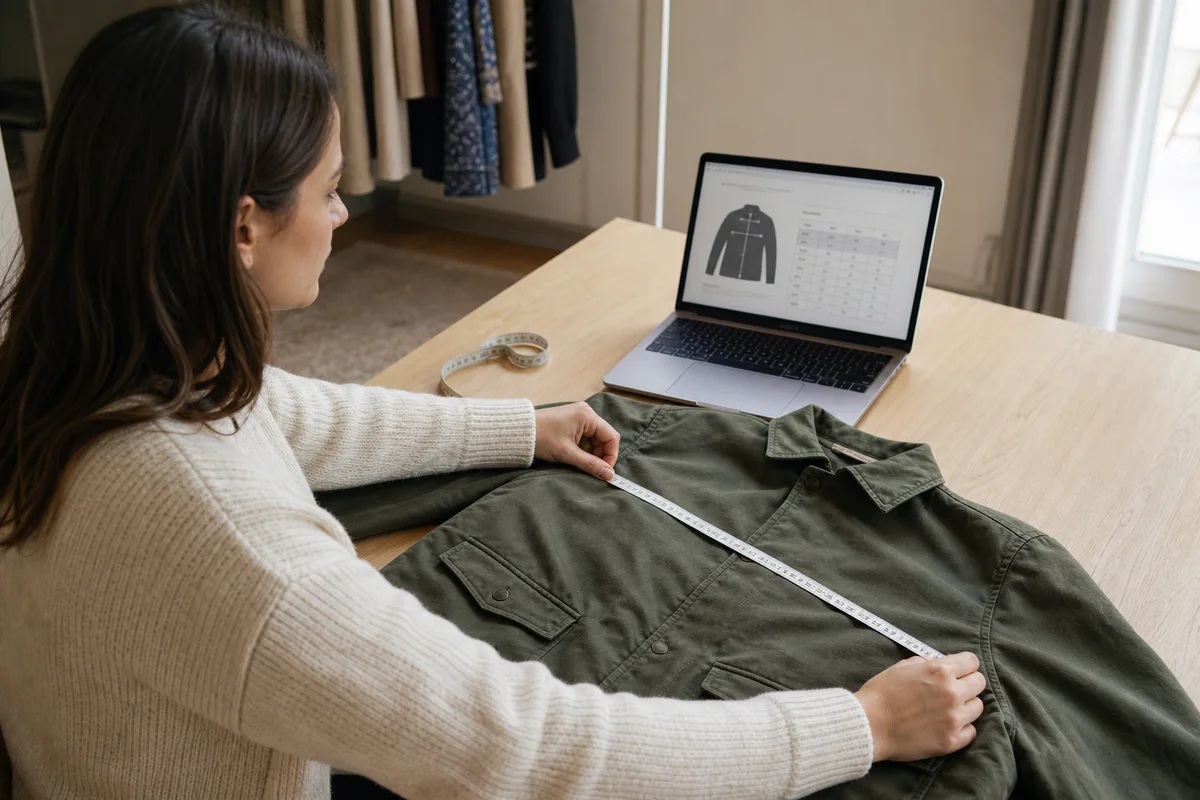
A recommendation should be traceable to the exact product and variant. Useful fields include:
- stable parent and variant identifiers;
- displayed size and size system;
- size type such as regular, petite, tall, maternity, or plus;
- garment measurements with units and instructions for how they were taken;
- intended fit and model-worn size where genuinely documented;
- material composition, stretch description, lining, and construction notes;
- colour, pattern, length, width, and other variant dimensions;
- care instructions and known shrinkage only when the source states it;
- current image, price, stock, URL, and return conditions;
- source and review date for the chart.
Google requires size data for many clothing and shoe listings and recommends treating each size variant as a separate product under the same item group. Its May 2026 guidance also added variant_option so merchants can identify variant-defining properties more explicitly (Google Merchant Center, size attribute). Our broader product-variant guide for AI shopping explains how parent products and exact sellable items should relate.
How should the assistant explain a recommendation?
A good answer separates evidence, interpretation, and uncertainty.
Consider this request:
“I wear an EU 40 and want this blazer to fit over a light knit. Should I get M or L?”
A weak answer says, “Choose L for comfort.”
A better answer says:
“This brand’s chart maps EU 40 to M. The product page describes the blazer as a close cut, and its M chest measurement leaves less room than the L for layering. Based on your preference, L is the safer of these two options—but I cannot guarantee the fit because the page does not publish shoulder width. Here are both variants and the store’s return conditions.”
That answer is useful because it names:
- what the source says;
- why the shopper’s stated preference changes the choice;
- which missing fact prevents certainty;
- what the shopper can do next.
Can an AI chatbot reduce fashion returns?
It may reduce returns caused by avoidable information failures:
- the wrong size system;
- a missed petite, tall, or length variant;
- misunderstanding a close or oversized cut;
- choosing a colour-size combination that was not actually available;
- overlooking material, lining, opacity, care, or included-item details;
- assuming the model’s worn size will behave identically on every body.
It cannot remove returns caused by personal taste, how a garment feels in motion, colour differences between displays, changed minds, defects, or incomplete product data. The aim is a better-informed purchase—not a mechanism that pressures shoppers to keep unsuitable items.
Our guide to preventing avoidable returns with a chatbot explains how to help before purchase while protecting the customer’s normal return route.
What should a fashion chatbot never claim?
Do not let the assistant say:
- “This will definitely fit you.”
- “You have this body type” based on a photo or a few measurements.
- “This fabric will not shrink” unless the approved source makes that claim.
- “The colours are identical” across screens, batches, or images.
- “Order two sizes and return one” unless the merchant deliberately supports that policy.
- “The model’s size proves your size.”
- “This item is suitable for a medical, adaptive, or sensory need” without evidence.
Body measurements can also be personal information. Collect only what the decision needs, explain why, avoid inferring sensitive characteristics, and do not silently reuse measurements for unrelated marketing. The same data-minimisation principle applies in the store’s broader AI chatbot privacy workflow.
How do you add an AI chatbot to a fashion store?
1. Start with one fit-heavy category
Choose jeans, bras, formalwear, shoes, outerwear, or another category where shoppers repeatedly ask about size and cut. A focused launch exposes data gaps quickly.
2. Audit the size charts as product data
Check whether the chart belongs to the brand, category, style, or exact product. Record the unit, measurement method, size system, and review date. Remove charts that contradict the current variants.
3. Separate hard constraints from preferences
A selected colour must be in stock in the selected size. A relaxed silhouette is a preference. The assistant may rank by preference only after every hard constraint is satisfied.
4. Connect products and approved guidance
Loqara can search product data exposed by supported connected storefronts and answer from approved knowledge sources. Available attributes differ by platform and catalog. Size charts, fit notes, care guidance, and exception rules may need to be added as knowledge when the storefront does not expose them cleanly.
5. Define the uncertainty response
When shoulder width, foot width, rise, stretch, or another decisive field is missing, ask for a different useful input, show the closest documented options, or hand off. Never fill the gap with generic fashion advice presented as product fact.
6. Test close calls
Include adjacent sizes, mixed EU/UK/US labels, unisex products, petite and tall variants, sold-out combinations, contradictory charts, rigid versus stretch fabric, and requests that cannot be answered from the data.
What can Loqara do—and what remains separate?
Loqara can:
- search current products in supported connected stores;
- ask conversational questions about intended fit, use, colour, budget, and preferences;
- answer from approved size, care, delivery, and policy content;
- show relevant products and capture questions for follow-up;
- route uncertainty to a person.
Loqara does not independently measure a shopper, perform a body scan, guarantee fit, create missing garment measurements, alter inventory, or approve a return. If a catalog provides only “S/M/L” and generic marketing copy, the assistant cannot manufacture a dependable fit model from it.
Which metrics reveal whether it works?
| Metric | What it reveals |
|---|---|
| Size-guidance completion | Whether shoppers can provide enough information |
| Verified recommendation rate | How often the chart supports a useful suggestion |
| Missing-fit-data rate | Which styles need better measurements or notes |
| Variant click and add-to-cart | Whether guidance moves the purchase forward |
| Size-related return rate | Whether assisted purchases still fail on size or fit |
| Exchange versus refund rate | Whether a nearby size resolves the problem |
| Handoff reason | Which categories need human expertise |
| Unsupported-claim rate | Whether the assistant exceeds its evidence; target zero |
Segment results by product family and reason. A lower overall return rate can hide a badly described style, while one difficult category can make a useful assistant appear ineffective.
Frequently asked questions
Can an AI chatbot guarantee which clothing size will fit?
No. It can compare the shopper’s information and preference with an approved size chart and garment measurements. Fit still depends on body proportions, movement, layering, construction, and subjective comfort. Phrase the result as documented guidance with visible uncertainty.
Should shoppers upload a photo for sizing?
A photo may help describe style, but it should not be treated as a reliable measurement or used to infer sensitive characteristics. Exact garment or body measurements supplied deliberately are usually more useful. Image handling also needs an explicit privacy purpose and retention policy.
Can the assistant convert EU, UK, and US sizes?
Yes, when the brand or product provides an approved conversion. Do not rely on a universal internet conversion when the merchant’s own sizing differs. State the source system and converted system in the answer.
Can it recommend an outfit instead of one item?
It can assemble products that meet the shopper’s occasion, style, budget, colour, and availability constraints. Each suggested variant should remain individually valid and in stock. Styling is a preference-based recommendation, not a fit guarantee.
Does it know which sizes are currently available?
Only when the connected product source exposes current variant-level availability. A parent product being “in stock” does not prove that the requested size-colour combination is available.
Will it stop legitimate fashion returns?
It should not. The assistant can explain the published policy and help avoid obvious selection mistakes, but it must preserve the normal return path and avoid invented exclusions, pressure, or blame.
The honest bottom line: a fashion assistant earns trust by showing why a size may suit the shopper—and by admitting the measurements it does not have.
Try Loqara free with one fit-heavy category, current variants, and a size chart your team would confidently use with a customer.