AI customer support · June 21, 2026 · 11 min read
Chatbot ROI: the 4 metrics that actually matter

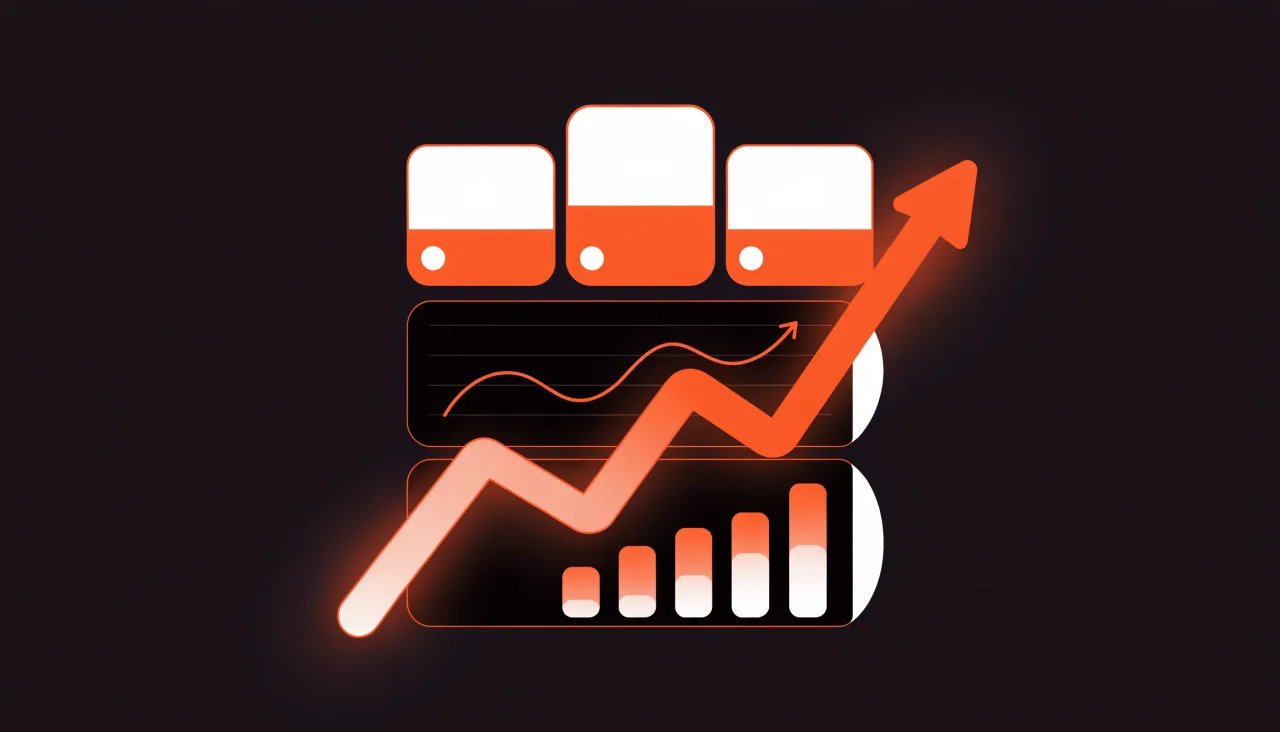
Most chatbot dashboards drown you in numbers — total messages, sessions, "engagement minutes" — that look impressive in a screenshot and tell you nothing about whether the thing is worth paying for. A bot can rack up tens of thousands of messages and still cost you money if none of those conversations close a ticket, capture a lead, or leave a customer happy. Activity is not the same as return.
The good news: proving (or disproving) chatbot ROI is simple once you measure the right handful of things — no data team required. You need to know which conversations the agent handled on its own, how fast it replied, whether people were satisfied, what it captured for sales, and what each conversation cost. This guide covers the metrics that prove a support chatbot is paying off, how to measure each, the framework for turning them into a currency figure, and the vanity stats to ignore.
Watch outcomes, not activity: deflection/automation rate and resolution rate prove the support savings, CSAT keeps them honest, conversion/AOV lift and leads captured show the upside, and cost per conversation turns it all into money. Ignore total messages, sessions, and "engagement time." Transparent per-conversation pricing — like Loqara's — makes your cost a known number.
Quick take
- ROI lives in five numbers: deflection/automation rate, first-response time, CSAT, resolution rate, and cost per conversation — plus conversion and lead capture for the revenue side.
- Deflection without satisfaction is a trap. Track CSAT alongside automation or you'll "resolve" conversations by frustrating people into leaving.
- Ignore vanity metrics: total messages, sessions, and "engagement time" measure activity, not value.
- The math is simple: support saved + revenue added, minus what the agent costs. For most stores, support savings alone cover it; captured leads are the upside.
- Transparent pricing makes ROI legible. Per-conversation billing (like Loqara's) means your cost-per-conversation is a known number, not a guess.

The metrics that prove ROI
Here are the metrics worth a place on your dashboard. The "what good looks like" column is deliberately a qualified range, not a fabricated precise stat — your real numbers depend on your catalog, your traffic, and how well you've fed the agent your content. (For industry-wide context on these ranges, see the AI customer service statistics we've compiled for 2026.)
| Metric | What it measures | Why it matters | What good looks like |
|---|---|---|---|
| Deflection / automation rate | Share of conversations resolved without a human | The core of support savings | Typically a majority of repetitive questions; should climb over time |
| First-response time | How fast a customer gets their first useful reply | Speed drives both satisfaction and conversion | Near-instant for an AI agent — seconds, not hours |
| Resolution rate | Share of conversations actually solved (not just answered) | Separates real help from deflection theatre | The large majority of handled conversations end resolved |
| CSAT | How customers rate the help they got | The quality guardrail on every other metric | Trending flat or up as automation rises |
| Conversion / AOV influence | Sales or basket size lifted by chat interactions | The revenue half of ROI most stores ignore | A measurable lift for shoppers who engage vs. those who don't |
| Cost per conversation | What each handled conversation costs you | Turns "savings" into a hard, comparable number | Predictable and well below a human-handled ticket |
| Leads captured | Contact details or sales intent captured | High-intent pipeline from shoppers mid-decision | A steady stream, not near-zero, when deflection is high |
Deflection / automation rate
This is the share of conversations the agent resolves without a human stepping in, and it's the core of your support savings. If your agent handles 1,000 conversations a month and 700 never reach a person, that's 700 tickets your team didn't touch. Multiply by the average time and cost of handling one ticket and you have a hard number for what the agent saves.
Watch the trend, not just the snapshot. Deflection should climb as you fill knowledge gaps — every escalation the agent couldn't handle is a clue about content you're missing. Feeding it more grounded answers is exactly how stores reduce support tickets with AI month over month rather than plateauing.
First-response time
First-response time is how long a customer waits for their first useful reply. For a human team it's minutes or hours; for an AI agent it should be near-instant. It matters for two reasons at once: it drives satisfaction (nobody likes waiting), and on a storefront it drives conversion — a shopper who gets an instant answer about sizing or shipping is far more likely to finish checkout than one who tabs away to wait.
Speed is also the easiest win an AI agent delivers. Even before deflection climbs, answering instantly 24/7 with no extra headcount moves this number from "hours" to "seconds" — a big part of why an AI chatbot for your online store pays back quickly.
Resolution rate
Deflection tells you a human didn't step in. Resolution rate tells you the customer's problem was actually solved. The distinction matters because a bot can "deflect" by stonewalling someone until they give up — that counts as deflected but it's a failure, not a win. Resolution rate is your check against deflection theatre.
Measure it by tagging conversations as resolved when the question was genuinely answered or the task completed (order found, product located, policy explained). A healthy agent resolves the large majority of what it handles; the rest should escalate cleanly rather than dead-ending.
CSAT
CSAT is how customers rate the help they got — a simple thumbs-up/down or short rating after a conversation. It's the quality guardrail on every other metric on this list. Deflection without satisfaction is the classic trap: you can drive automation up by frustrating people into closing the chat, and the dashboard will look great while your reviews quietly rot.
The pattern to watch is divergence. If CSAT drops while deflection rises, the agent is closing conversations it shouldn't. Healthy ROI means both move up together — more conversations handled, and customers still happy with the outcome. Loqara collects CSAT in-conversation so this guardrail is built in, not bolted on.
Conversion and AOV influence
This is the revenue half of ROI, and most stores never measure it. Your agent talks to shoppers mid-decision — "does this run small?", "is this in stock in blue?", "when will it arrive?" — and those answers move people from browsing to buying. To capture it, compare conversion rate and average order value for sessions that engaged the chat against sessions that didn't.
A product-aware agent that does live product search and order lookup is what makes this real — it can recommend, reassure, and unblock a purchase in the moment. A bot that only matches FAQ keywords shows little here; one that understands your catalog shows the lift. (For the deflection-vs-sales balance, see how to choose an AI support agent.)
Cost per conversation
Savings only become ROI when you can divide by a real cost. Cost per conversation is exactly that: what each handled conversation costs, all-in. The catch is that the answer depends on your pricing model — and vendors love to obscure it. "Per resolution" pricing can be defined generously and is hard to predict; per-seat fees don't scale with the work the AI actually does.
Per-conversation pricing makes this metric trivial to read, because the unit you're billed on is the metric. Loqara prices per conversation (with a free tier of 100 a month), so cost per conversation is a known number you can drop straight into the ROI math below — not something you reverse-engineer from an invoice.
Leads captured
The last metric is pure upside. Your agent is talking to high-intent shoppers; the ones who aren't ready to buy today are still real leads if you capture their contact details or intent. If your deflection is high but leads captured is near zero, you're leaving sales on the table. Count captured leads, and ideally the revenue that later closes from them, to see the full picture.
Vanity metrics to ignore
The vanity-metric trap
Three numbers look great in a report and prove nothing. Total messages rewards a chatty bot, not a helpful one — a thousand back-and-forths can mean a thousand confused customers. Total sessions counts traffic, which your marketing drives, not your agent. "Engagement time" is actively backwards: in support, shorter is better, because a fast resolution beats a long one. If a metric goes up when your agent gets worse, it's a vanity metric. Judge the agent on outcomes — resolved, satisfied, deflected, captured — not on activity.
The same caution applies to any single number viewed alone. Deflection without CSAT, conversion without resolution rate, message volume without cost per conversation — each tells a flattering half-truth. The metrics on this list are useful precisely because they check each other.
How do you actually calculate ROI?
You don't need a model. Three lines turn the metrics above into a figure in real currency:
- Support saved = deflected conversations × cost per ticket handled by a human.
- Revenue added = (leads captured × close rate × average order value) + the conversion/AOV lift from chat-engaged sessions.
- Quality guardrail = CSAT staying flat or rising, so none of those savings come at the customer's expense.
Add support saved and revenue added, subtract what the agent costs you (deflected conversations × your cost per conversation), and you have ROI in actual money — not "engagement." For most stores the support savings alone cover the cost of the agent; the captured leads and conversion lift are the upside that makes it an easy decision.
Two practical notes. First, measure the trend over a few months, not week one — deflection and resolution climb as you close knowledge gaps. Second, keep the cost side honest: transparent per-conversation pricing makes the denominator a known number, which is why it's worth checking how a tool bills before you commit. (Heavyweight suites that bill per "resolution" can make this math far murkier — see Gorgias alternatives and Intercom alternatives if that's where you're starting.)
Frequently asked questions
What is a good deflection rate for an e-commerce chatbot?
There's no universal number, because it depends on how repetitive your questions are and how well you've fed the agent your content. As a guide, a grounded agent should handle a clear majority of routine questions — order status, sizing, returns, stock — and that share should climb over the first few months as you fill knowledge gaps. Watch the trend rather than chasing a fixed target.
How do you measure chatbot ROI?
Add up support saved (deflected conversations multiplied by your cost per human-handled ticket) and revenue added (captured leads that close, plus any conversion or basket-size lift from chat-engaged shoppers), then subtract what the agent costs you. Compare that to the agent's price and you have ROI in real currency. Measure it over a few months, since deflection and resolution rates improve as the agent learns your catalog and policies.
What is the difference between deflection rate and resolution rate?
Deflection rate is the share of conversations handled without a human stepping in; resolution rate is the share where the customer's problem was actually solved. They're different because a bot can "deflect" by frustrating someone into giving up, which looks like a win on a dashboard but isn't. Tracking both together stops you from mistaking avoidance for help.
Which chatbot metrics are vanity metrics?
Total messages, total sessions, and "engagement time" are the usual culprits. They reward activity rather than outcomes — a chattier or slower bot can score higher while helping less — and in support, a longer conversation is usually worse, not better. Judge the agent on resolved, satisfied, deflected, and captured instead.
How does a support chatbot affect sales, not just support costs?
A product-aware agent answers the questions that block a purchase — fit, stock, shipping timing — in the moment a shopper is deciding, which lifts conversion and average order value. It also captures high-intent leads who aren't ready to buy today. To quantify it, compare conversion and basket size for chat-engaged sessions against sessions that didn't use chat.
Why does cost per conversation matter more than the sticker price?
Because the sticker price doesn't tell you what the work costs once volume scales. Per-seat fees don't track the AI's workload, and "per resolution" pricing can be defined loosely and is hard to forecast. Per-conversation pricing makes cost per conversation a known, predictable number you can drop straight into your ROI math.
The bottom line: ignore the activity metrics and watch the outcomes — deflection and resolution prove the support savings, CSAT keeps them honest, conversion and lead capture show the upside, and a transparent cost per conversation turns it all into a number you can defend. Loqara surfaces conversation analytics, built-in CSAT, grounded answers, product search, and per-conversation pricing; WooCommerce and Magento stores can also measure identity-checked order lookup. Measure the payback, not the noise.
Try Loqara on your store free — one line, no credit card, live in an afternoon.