Vendor comparisons · July 3, 2026 · 11 min read
Zendesk AI in 2026: features, pricing, and when it's overkill

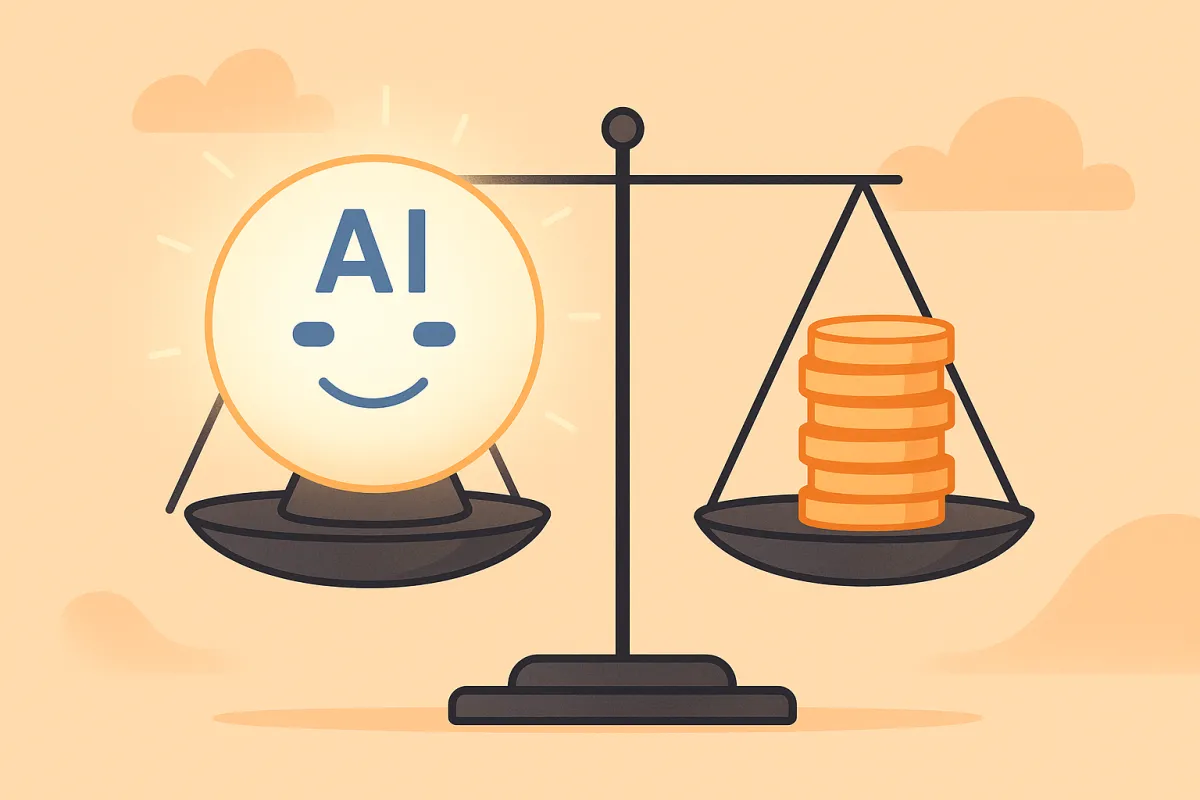
Zendesk AI is genuinely good. Let's get that out of the way first, because most reviews of enterprise software from smaller vendors open with a hatchet job, and that's not what this is. Zendesk has spent years building AI into every layer of its suite — autonomous AI agents, an agent-facing Copilot, intelligent triage, quality assurance — and for a large support organisation, the result is one of the most complete platforms on the market.
The real question isn't whether Zendesk AI is good. It's whether it's good for you. Zendesk is built for teams — plural agents, plural channels, plural workflows — and its pricing model reflects that. If you run an online store with two people answering tickets between shipping orders, you can end up paying for a lot of machinery you'll never touch, on a pricing unit (the "automated resolution") that's harder to predict than it first appears.
Below is what Zendesk AI actually includes in 2026, what it costs plan by plan, how the per-resolution billing really works, and — honestly — the situations where it's the right call versus the situations where it's overkill.
It depends who you are. Zendesk AI is genuinely strong — and worth it — for support orgs with 10+ agents, multiple channels, and compliance needs. For most small and mid-size stores, it's usually overkill: seat fees stack with unpredictable per-resolution charges, and a purpose-built e-commerce agent delivers grounded answers, order lookup, and handoff at a price you can forecast.
Quick take
- What it is: AI woven through the whole Zendesk Suite — autonomous AI agents for customers, Copilot for human agents, triage and QA behind the scenes.
- Pricing model: per-agent seats ($19–$115+/agent/month) plus usage-based "automated resolutions" for the AI agents, plus add-ons like Copilot at ~$50/agent/month.
- Great for: support orgs with 10+ agents, multiple channels, and compliance/workflow needs.
- Overkill for: most small and mid-size e-commerce stores, where the seat fees and resolution metering outweigh the benefit.
What Zendesk AI actually is
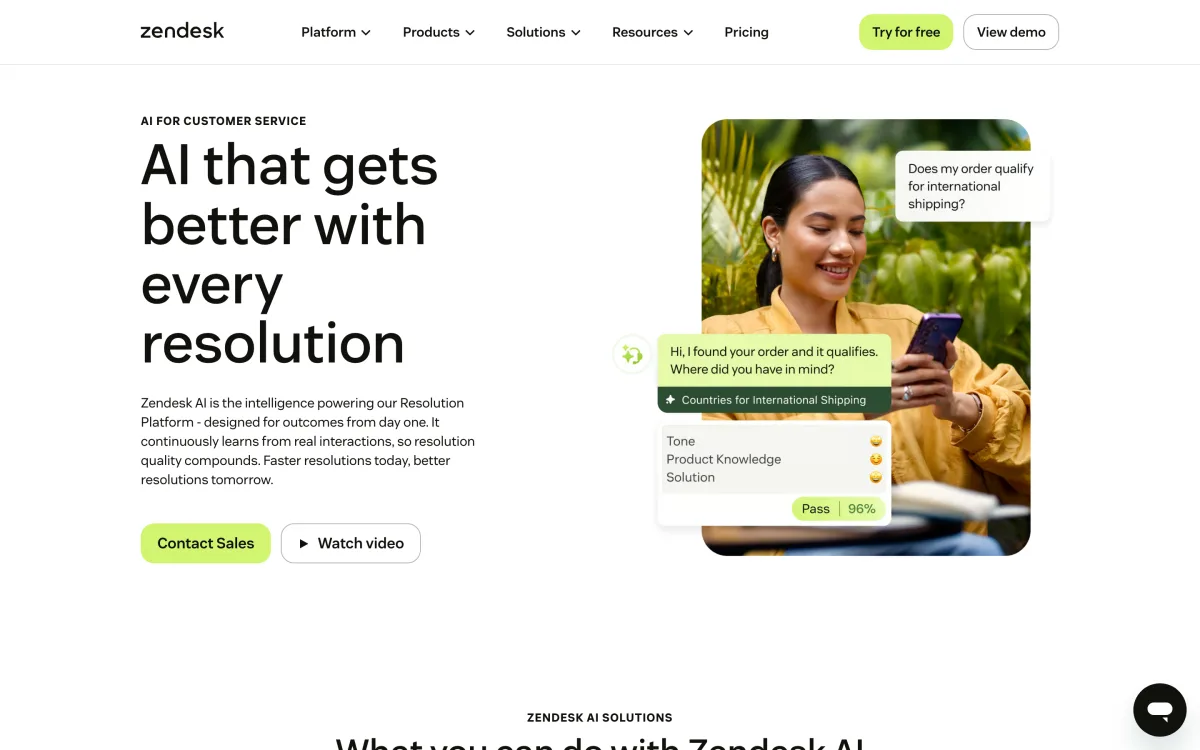
"Zendesk AI" isn't one product — it's a family of features layered across the Suite. It helps to separate them, because they're bought (and billed) differently:
AI agents. The customer-facing piece: autonomous bots that answer questions across messaging, email, and — on higher tiers — voice. As reviewed on 26 August 2026, AI agent capabilities are included in every Suite and Support plan rather than sold as a separate "Advanced AI Agents" add-on. Usage is still metered by automated resolution (more on that below).
Copilot. The agent-facing piece: drafting replies, summarising tickets, suggesting next steps for your human team. Zendesk's current pricing lists it at $50 per agent per month on annual billing.
Intelligent triage and routing. Auto-classifying tickets by intent, sentiment, and language, then routing them to the right person or queue. Genuinely useful at volume; largely irrelevant if two people share one inbox.
Quality assurance and workforce management. AI-scored conversation reviews and staffing forecasts are packaged as optional workforce products. Zendesk's public pricing currently lists a $50/agent/month Workforce Engagement Bundle; confirm the exact included modules and contract terms with sales.
Notice the pattern: almost everything is designed around the assumption that you have a team of agents whose productivity is worth optimising. That's the correct assumption for Zendesk's core market. It's the wrong one for a store where the goal is simply "answer customers well without hiring anyone."
One more thing worth knowing before the pricing: setup is a project, not an afternoon. Zendesk AI performs best after you've structured a help center for it to draw on, configured intents and routing, connected your channels, and tuned the AI agent's behaviour. Larger teams often budget weeks for this (and sometimes a partner agency). That investment pays off at scale — it's simply worth being clear-eyed that "AI included on every plan" doesn't mean "working out of the box on day one."
Zendesk pricing in 2026, plan by plan
Here's the lineup reviewed on 26 August 2026 (annual billing, per agent per month — always check Zendesk's pricing page for current numbers):
| Plan | Price (annual) | What you get | AI included |
|---|---|---|---|
| Support Team | $19/agent/mo | Email + ticketing basics | AI agents (metered), no messaging channels |
| Suite Team | $55/agent/mo | Omnichannel: messaging, live chat, voice, knowledge base | AI agents (metered) |
| Suite Professional | $115/agent/mo | Adds skills-based routing, IVR, better analytics | AI agents + admin Copilot features |
| Suite Enterprise + Copilot | Custom (talk to sales) | Sandbox, custom roles, approval workflows | Intelligent triage, auto assist, generative voice AI |
Prices and inclusions reviewed against Zendesk's official pricing on 26 August 2026. Packaging and quoted usage rates can change, so verify before budgeting.
Two things the table doesn't show. First, the interesting AI features cluster at the top: the deeper automation lives on Professional and Enterprise. Second, seats are only the floor of the bill — the AI agents, Copilot, QA, and WFM each add their own line item.
The exact total depends on seats, plan, add-ons, channels, and the automated-resolution rate in your quote. Zendesk's public pricing does not publish one universal all-in figure, so model those line items explicitly instead of relying on a generic deployment estimate.
How does per-resolution pricing really work?
This is the part worth slowing down on, because it decides whether Zendesk AI is affordable for you.
Zendesk's AI agents are billed per automated resolution — you pay only when the AI fully resolves a customer request without escalating to a human. On paper that's fair, even elegant: no resolution, no charge. In practice, three things catch buyers out:
- Allowances and rates are contract-sensitive. Zendesk says AI agents are included in Suite and Support plans, but the public pricing page does not publish one universal automated-resolution allowance or overage rate. Get both numbers in writing for your selected plan.
- The vendor defines "resolved." Zendesk bills when the AI successfully resolves a request without escalation. Read the current automated-resolution definition and reporting rules, then verify them against your contract before forecasting.
- Success makes the bill grow. The better the AI performs, the more you pay. That's defensible economics, but it means your costs scale with your ticket volume, not your team size — which is backwards for a growing store whose whole aim is to automate more.
Model it before you sign
Take your real monthly conversation volume, assume the AI resolves 50–70% of it, and multiply by the per-resolution rate on top of your seat fees. Then compare that against flat per-conversation pricing from other vendors. On the same traffic, the two models can differ by 3–4×. Our guide to chatbot ROI metrics walks through the maths in detail.
None of this makes Zendesk's pricing dishonest — it's published and it's rational for their market. It just makes it unpredictable for a small team, and unpredictable is the one thing a small team's budget can't absorb.
What Zendesk AI does well
Credit where it's due — there are real reasons Zendesk keeps winning enterprise deals:
Strengths
- Truly omnichannel — email, chat, social, voice, all in one workspace with shared context
- AI agents now included on every plan, trained on years of real support data
- Copilot meaningfully speeds up human agents at scale
- Intelligent triage and routing are excellent once volume justifies them
- Enterprise-grade compliance, roles, sandboxes, and a huge app marketplace
Trade-offs
- Costs stack in multiple dimensions: seats + resolutions + add-ons
- The best AI features sit on the priciest tiers
- Real configuration effort — this is a platform you administer, not a widget you embed
- E-commerce actions (order lookup, product search) mostly arrive via marketplace apps, not natively
- Per-resolution billing makes budgets hard to forecast as you grow
That fourth trade-off deserves a sentence more. For an online store, the highest-value automations are catalog search and "where's my order?" lookups. Zendesk can do these — through Shopify apps and integrations — but they're assembled, not built-in. Purpose-built e-commerce tools treat them as the core product.
When Zendesk AI is overkill
Here's the honest test. Zendesk AI is probably overkill if most of these describe you:
- You have 1–5 people touching support, and none of them works in a helpdesk all day.
- Your questions are store questions — order status, shipping, returns, sizing, stock — rather than complex multi-team escalations.
- You want to be live this week, not after a configuration project.
- You need to predict your bill, because support is a cost line, not a department.
If that's you, you don't need a smaller Zendesk — you need a different shape of tool: an AI agent that answers from your store's own content and plugs into your platform directly. We've written up a full list of Zendesk alternatives for e-commerce, but the short version of what to look for: grounded answers (no invented policies), native product search and order lookup, human handoff, and flat pricing.
Full disclosure — Loqara is our product, and it's built for exactly this gap. It answers from approved store knowledge with source citations, searches connected product catalogs, supports identity-checked order lookup on WooCommerce and Magento (not Shopify), hands off to a human on every plan including the free one, and can take real-time voice calls in the widget. Pricing is flat per-conversation — free for 100 conversations a month, then €149–€449/month — so the bill doesn't grow just because the AI got better. One line of script and you're live. It is not a Zendesk replacement for a 50-agent org; it's what you use instead of buying one when you're a store, not a support department. Our buyer's checklist can help you pressure-test either choice.
Who should still pick Zendesk
Equally honestly: plenty of teams should ignore everything above and buy Zendesk.
- You have 10+ agents across multiple channels. The workspace, routing, and Copilot pay for themselves in agent time.
- You're already on Zendesk company-wide. Consolidation beats best-of-breed for most IT departments, and the AI agents are now included in your plan anyway.
- You have compliance and workflow requirements — approval chains, sandboxes, custom roles — that lightweight tools simply don't offer.
- Support is a department with a budget owner who can absorb variable per-resolution costs in exchange for higher deflection.
For that buyer, Zendesk AI in 2026 is arguably the safest choice on the market. The mistake isn't buying Zendesk — it's buying it three years before you need it.
Frequently asked questions
What is Zendesk AI and what does it include?
Zendesk AI is the umbrella for the AI features across the Zendesk Suite: customer-facing autonomous AI agents (included on Suite and Support plans as reviewed 26 August 2026, billed per automated resolution), the agent-facing Copilot add-on ($50/agent/month on annual billing), intelligent triage and routing, and optional workforce products. It's a layer across the whole helpdesk rather than a single product.
How much does Zendesk AI cost in 2026?
Seats run from $19/agent/month (Support Team) through $55 (Suite Team) and $115 (Suite Professional) to custom Enterprise pricing, billed annually. AI agent usage is metered per automated resolution, Copilot is $50/agent/month on annual billing, and optional workforce products add more. These public figures were reviewed on 26 August 2026; ask Zendesk for the resolution allowance and rate applying to your contract.
What counts as an "automated resolution" in Zendesk?
A conversation the AI agent handles fully without escalating to a human. You aren't charged when the bot fails or hands off — but the vendor's systems decide what "resolved" means, and a customer who just stops replying can count. Before committing, model your real volume at a realistic resolution rate against the per-resolution price in your quote.
Is Zendesk AI worth it for a small e-commerce store?
Usually not. Zendesk's strengths — multi-agent workflows, routing, Copilot, compliance — assume a support team, and its costs stack across seats, resolutions, and add-ons. A small store mostly needs grounded answers, order lookup, and human handoff at a predictable price, which purpose-built e-commerce agents deliver with far less setup. See our Zendesk alternatives for e-commerce for options.
Can Zendesk AI look up Shopify or WooCommerce orders?
Yes, but typically through marketplace apps and integrations rather than natively — you assemble the e-commerce capability on top of the helpdesk. Tools built for stores treat live product search and identity-checked order lookup as the core feature, which matters because "where's my order?" is usually the single biggest ticket category a store can deflect.
The honest bottom line: Zendesk AI in 2026 is a genuinely strong, complete platform — for support organisations. If you have the team and the volume, buy it with confidence. If you're a store with a handful of people and mostly repetitive product and order questions, it's an expensive way to solve a smaller problem, and a purpose-built alternative will get you live faster at a price you can actually forecast.
Zendesk's public features and prices were reviewed on 26 August 2026. They remain approximate; check the current pricing page and your quoted automated-resolution terms before deciding.